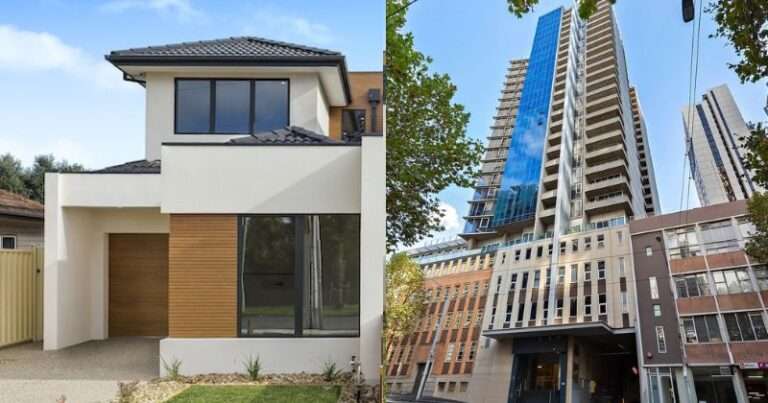
Melbourne is being told to “build up” but is being shown why it’s not that easy. State Government planning ambition and market reality have collided. The Victorian Government’s planning rhetoric for more apartment development in established suburbs from Mitcham to Malvern is at odds with their own property taxes and rules that make property investment less attractive.
They either want to encourage property development and investment or they don’t. At the moment, “don’t” is winning.
You can rezone a suburb in a day but that only marginally alters the feasibility of an apartment project. There are already dozens of sites with planning approval, shovel ready and sitting idle because they don’t stack up financially.
What’s changed in apartment development.
For decades governments and regulators have understood the critical role private “Mum and Dad” investors play in owning and providing housing and rental accommodation. Incentives like stamp duty concessions and negative gearing encouraged property investment. Apartments and homes got built and people had a place to rent or buy.
For decades leading up to 2020, hundreds of thousands of new homes were built providing vital housing to buy or rent across Melbourne.
The entire feasibility of a large apartment development project relies on “off the plan” sales for the project to be built at all. No sales – no apartments. No one will fund a development otherwise. Off the plan buyers were predominantly investment buyers. Especially for larger projects with longer build times.
Property taxes
Fast forward to today and we have governments who are actively discouraging property investment.
- Land tax
- Vacant residential land tax
- Compliance
- Ever tightening rental rules
- Threat of reducing negative gearing and CGT concessions.
No one should be surprised that we have a housing shortage and a diminishing rental pool. The very people the government said they were trying to help, are being squeezed out of either renting or owning property because not enough new homes are being built.
Mum and Dad investors are a critical link in the incubator or “start up” for new housing.
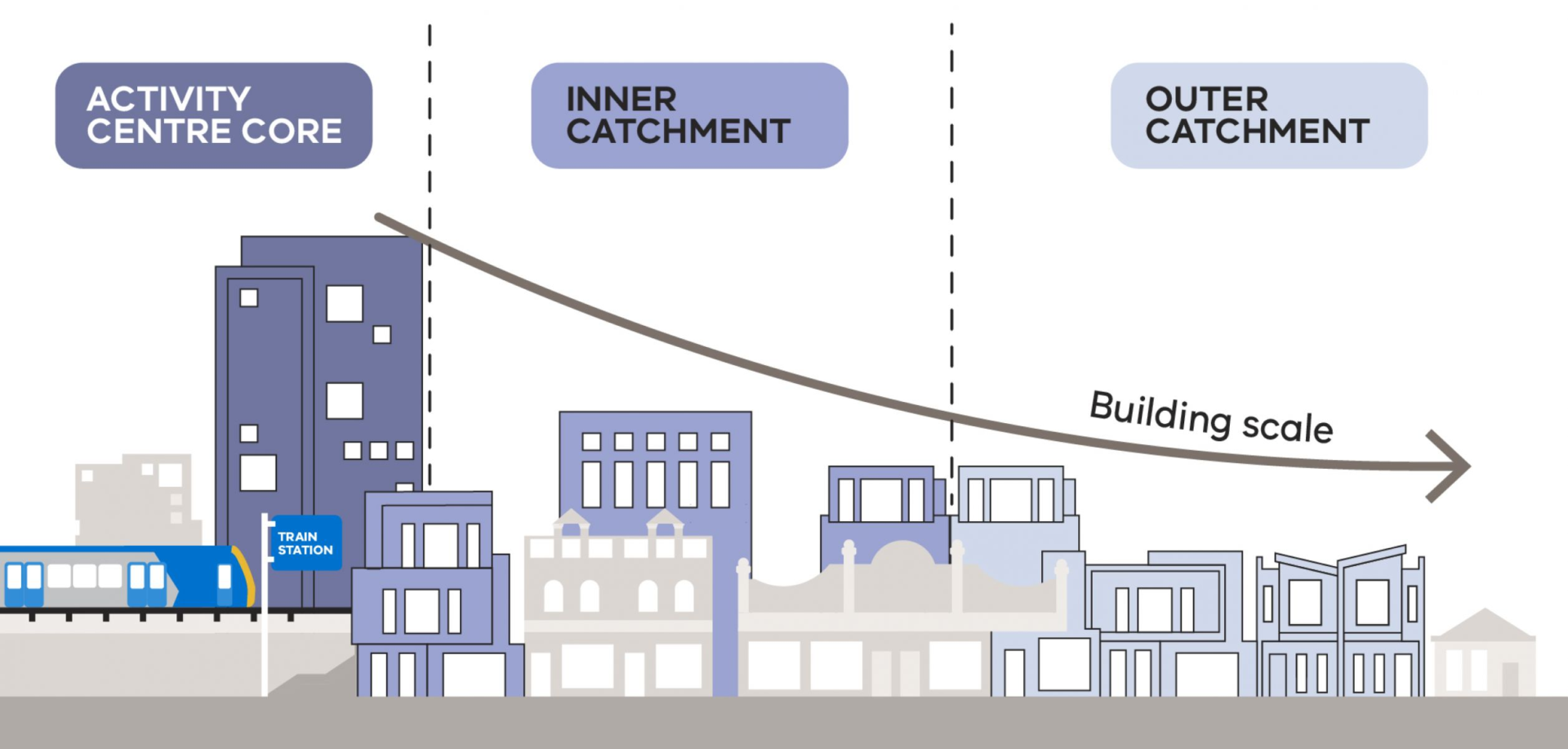
Central Activity Centres
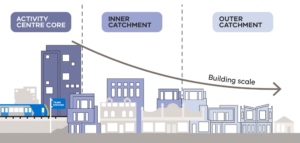
The headline government policy direction is to encourage more apartment developments in established areas close to transport, jobs and amenity, instead of endlessly stretching Melbourne’s fringe. In principle, it’s hard to argue with this. People can live in the established areas they love, and Melbourne needs housing where demand is deepest.
But the feasibility of new projects is the part that doesn’t connect into a ministerial graphic.
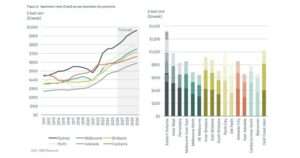
If existing apartments are selling at or below the cost to build a new one, that’s not just a quirky stat. It’s a signal flare. It tells you something about buyer confidence and the ongoing mismatch between the cost to build and the value of the finished product.
When the resale market is flat, it’s harder to justify building new apartments. Especially ones that require a buyer to pay tomorrow’s price (whatever that may be) today.
Apartment developments get approved by banks and not planners.
Planning is necessary. Finance is decisive.
Feasibilities have been squeezed from every angle. Higher build costs, tighter construction conditions, more conservative funding settings, and owner occupier buyers who are far more selective about quality in the Melbourne apartment market.
Consequently a government directive that says “we’ll allow 16 storeys here” doesn’t automatically translate into cranes in the sky. A planning map can say yes, but a financier still needs to see:
- lots of pre-sales
- pricing that holds up under valuation scrutiny
- margins that survive real-world construction risk
- a product that people actually want to live in
A rezoning helps but it’s not a business case.
The takeaway
Melbourne is having a loud conversation about height limits in quiet streets. But the other conversation is how do we get apartment developments built that people want, and at a price that developers can deliver?
Because if we don’t solve feasibility, we’ll get plenty of town planning moves … but no-one planning to move.
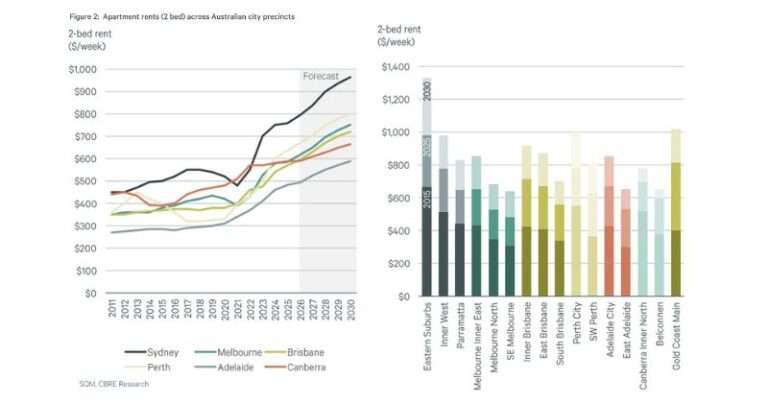
To get more development we actually need the value of apartments to rise or costs to reduce. Building costs including labour have never fallen, so the harsh truth is values need to rise. This means the government need to incentivise investment and not create financial headwinds.
Even in the absence of government pulling levers the market will over-ride it and values will rise on pure demand and supply metrics.