Two forces are at odds in the Melbourne market as apartment rent and values are set to surge. One driver is pure market forces and the other is political, as the state government attempts to artificially retard the growth. Who do you reckon will win?
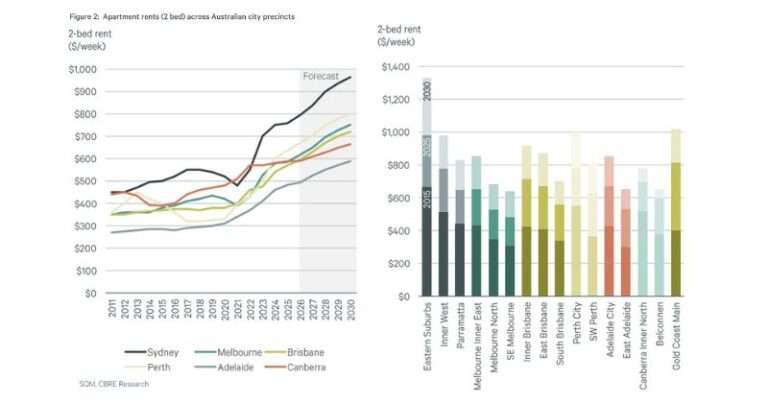
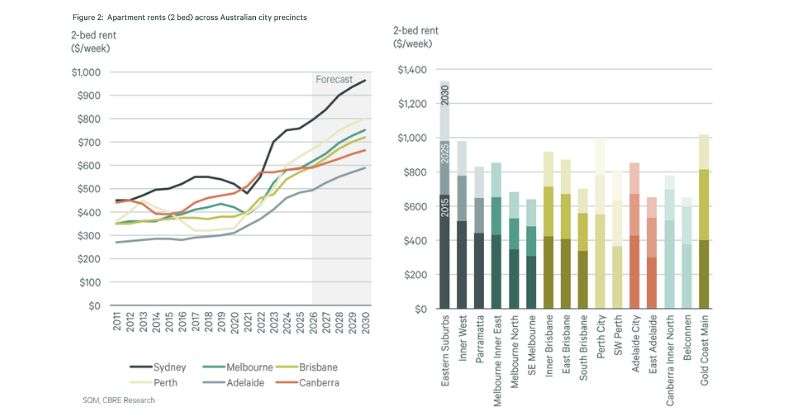
The market force direction is hard to miss. CBRE just released the Apartment vacancy, rent and price outlook which forecasts median apartment rents across 53 precincts in Australian capital cities to rise by 27% between 2025 and 2030. In Melbourne, the numbers tell an even more revealing story.
According to CBRE research, apartment completions are expected to average only about 8,200 a year over the 2026 to 2030 period. Over the same period, housing demand 39,500 homes a year. Vacancy is forecast to tighten from 2.1 per cent to 1.4 per cent. That is a seriously tight market. Demand is building, supply is falling behind, so rent and prices are rising because the city simply does not have enough stock where people want to live.
Melbourne is also being seen as good value compared to other capital cities which adds fuel to the fire. Melbourne is attracting interstate and international migration as it is seen as undervalued. Melbourne is growing faster than Sydney. ABS numbers released this week show Melbourne added 105,000 people over 12 months in 2025 compared to 75,200 people in Sydney. Melbourne still offers relative value but is now facing the risk of a supply shortage. It will continue to attract a disproportionately larger number of people than other cities putting upward pressure on rent and values.
Then comes the second force in this battle. A state government desperate to be seen to protect tenants from a rampant market. A market of their own making. The Allan government wants to look like it is protecting tenants from rising rents. As they have shifted the balance of landlord vs tenants’ rights further to the tenant, it has made it less attractive for people to own investment property and offer rental accommodation. Plus, added government imposed costs to owners are being passed on to renters further fuelling the market.
Landlords who have a well managed and maintained property have been less impacted and can enjoy the recent rise in rents and forecast value growth. All the new rules have hit renters hard in the hip pocket unfortunately.
The Government is now wishing to make rent increases harder to impose on tenants. Politically, that appears to support the rental voter, but it risks pushing rents higher again and creating a two tier rental market. One rent for a sitting or existing tenant, and a different rent for a property on the open rental market. Markets do not usually respond to political intentions. They respond to basic economic forces, like scarcity, demand and capacity to pay. That is where government policy begins to look less like a solution and more like a distortion.
The problem with trying to artificially hold back rents is that the pressure just mounts higher and shifts elsewhere. This sort of policy is a second cousin to a rent freeze policy which has been tried in places like Scotland, Berlin, San Francisco, Dublin and Toronto. It just creates bigger problems in the long run as market forces overrun regulation.
Turning to capital values, CBRE makes the point that if rents keep rising while vacancy keeps tightening, then values should follow. CBRE says median apartment prices are expected to grow 28% between 2025 and 2030, with the strongest growth in 2026 and 2027. When supply remains constrained and new completions lag demand, rental income strengthens, yields look more compelling, and existing apartments become more valuable as income producing assets. In Melbourne’s case, that should be particularly supportive for established stock, because the city is still dealing with a meaningful supply shortfall at the same time as vacancy is forecast to compress.
Recent events in the Middle East just make construction costs even higher. This means existing apartments should benefit from even higher replacement costs and scarce new development options. This favours well located established stock over even higher priced future supply. That means capital values in Melbourne are likely to be pushed up not just by stronger rents, but by the growing recognition that buying an existing apartment may be cheaper and less risky than buying new stock.