It’s land tax time in Victoria and bills are hitting the kitchen table with a thud. Once bemoaned only by large commercial real estate investors, now land tax hits almost every residential rental provider.
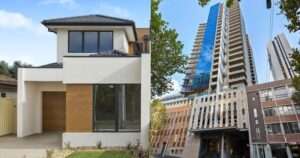
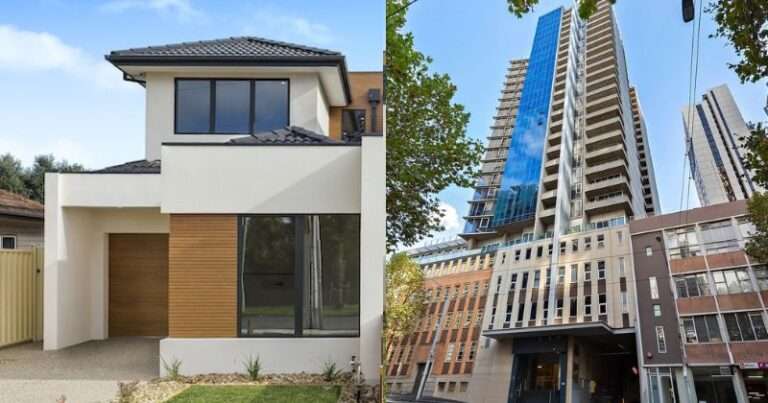
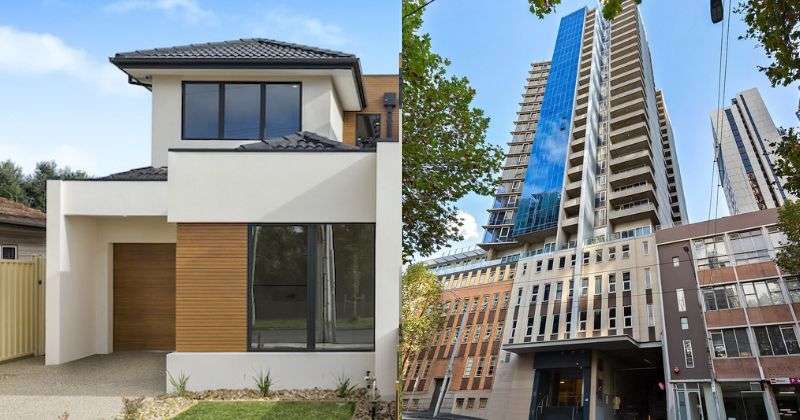
Interestingly though, house owners are paying very different amounts in land tax to apartment owners. Even when two properties are generating the same rent, and are in a similar location, they are paying a vastly different amount of land tax.
Land tax is charged on land value (called “site value” on your council rates notice), not on rental income, and not on the building itself. That matters because the site value of a house is usually much higher than an apartment, which only has a proportional allocation to the total land value underneath the building. That is why the rent can be identical for a house and an apartment, but the land tax bills can be very different.
Here is a real example of two properties managed by Wood Property in similar suburbs of Melbourne.
Property A – House
- A Semi-detached brick house
- Rental income $650/wk
- Site value – $800,000
- Land Tax – $3,450 p.a. (10.18% of gross income)
- Gross income less land tax – $30,440 p.a.
Property B – Apartment
- 2-bedroom ground floor apartment
- Rental income $650/wk
- Site value $115,000
- Land Tax – $ 975 p.a. (2.88% of gross income)
- Gross income less land tax – $32,925 p.a.
In this example, land tax for the house is equal to 5.3 weeks rent but is only 1.5 weeks rent for the apartment.
In a land tax world, the relative annual income of an apartment vs a house is now very different. For investors chasing annual return over capital growth, it is shifting them to buy apartments over houses.
We can debate the equity or fairness of this, but the fact remains. Land tax is now a key question for any investment buyer.
Obviously, land tax is only one cost for an investor to consider. Apartments have owners corporation fees and a house have maintenance for roofs, gardens, external walls, building insurance etc.
We have shown in previous stories that some apartments are selling with an annual gross return up to 9%. This demonstrates the imbalance between sluggish capital values and surging rental values. With land tax on smaller apartments being $975 (site value $100,000 – $300,000) the rental yield is more protected. Land tax can be only $500 or even $0 for properties with a site value below $100,000
For a quick refresher on how land tax is calculated or how we got here check this out.
You can also calculate your own land tax here
This is all about annual return. What about capital growth? It’s generally accepted that property with a larger land area will have greater capital appreciation. This may be true, but it depends on many other factors. Things like suburban and specific location, surrounding developments, infrastructure changes, town planning changes, how the improvements add value all impact capital growth.
You can calculate the annual return of a property investment with some certainty. Future capital growth is a promise that may or may not be delivered and is a 10 yr plus investment horizon.
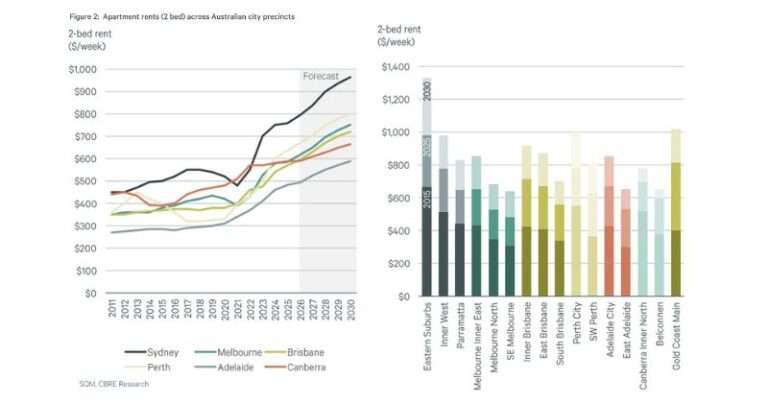
The land tax differential is just one reason the Melbourne apartment market deserves a more serious look. The other is how cheap Melbourne Apartments are relative to the rest of the country.
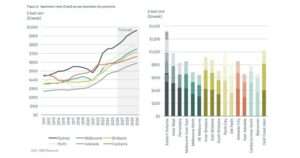
Charter Keck Cramer just released its State of the Market report H2 – 2025 which showed the median unit (apartment) price in Melbourne is $615,792 sits second last and only above Canberra. This compares to the median unit price in Sydney and Brisbane of $876,718 and $770,007 respectfully. This puts Melbourne values 30% below Sydney. Bizarre give Melbourne coffee is 100% better. 😄
This differential in price and attractive annual return goes a long way to compensate for any additional land tax paid in Victoria.